
DIR/Floortime®, grounded in occupational therapy.
Helping you understand your child — not just work on your child.
What is DIR/Floortime® therapy?
Growing Through Play combines DIR/Floortime®, pediatric occupational therapy, and caregiver coaching to support the whole child. DIR/Floortime® is a developmental, individual-differences, and relationship-based approach that uses connection, play, and your child’s interests as the starting point for growth.
Rather than asking, “How do I get my child to do this?” — we ask:
“What is my child communicating?”
“What is motivating them?”
“What might be making this harder?”
And then we build from there.
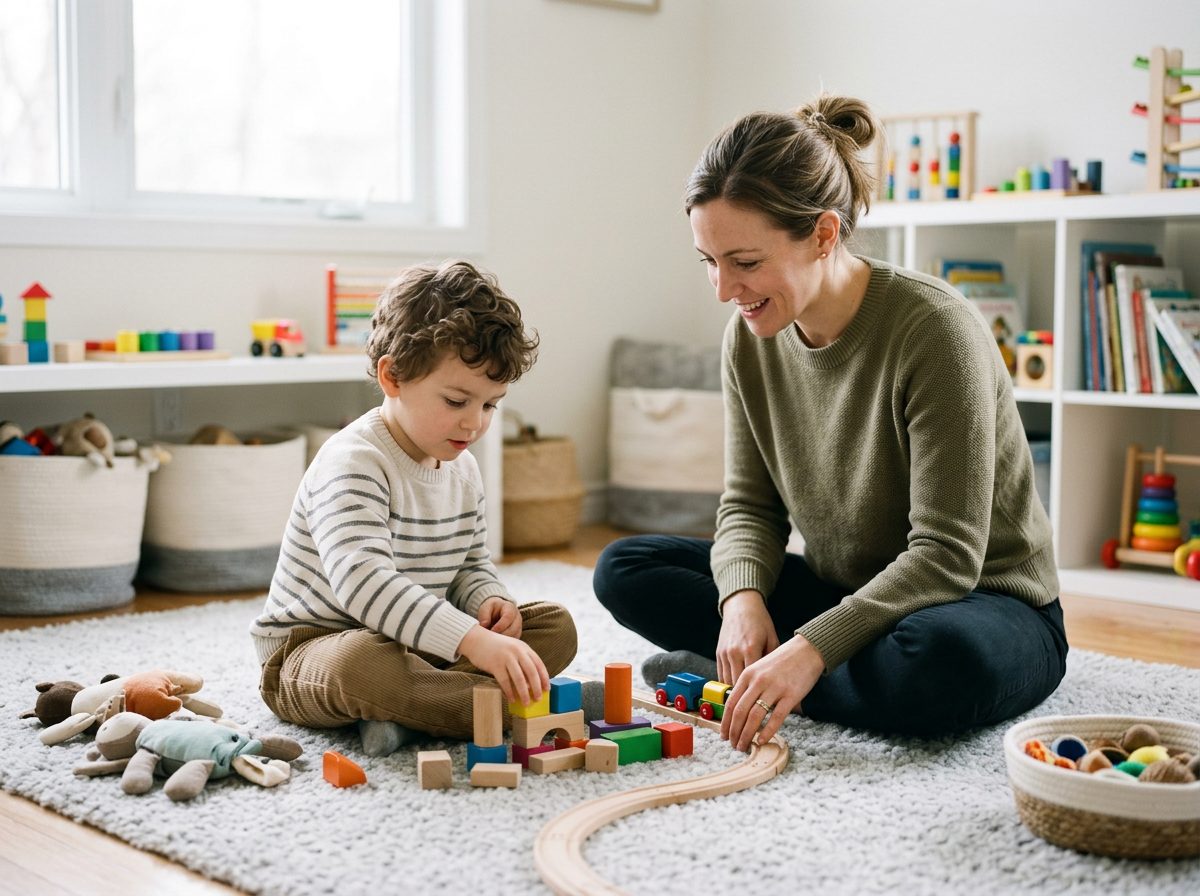
Follow their lead. Join their world. Grow together.
What does that look like?
- We get down on the floor.
- We follow your child’s interests.
- We notice how they communicate.
- We adjust to their sensory and regulation needs.
- We create opportunities for back-and-forth interaction, communication, problem-solving, and shared joy.
Play isn’t a reward after therapy. Play is where meaningful learning happens.
And because this happens in your home, we’re working with the routines and moments that actually matter to your family.
OT + DIR/Floortime®
Two lenses. One child.
As an occupational therapist, I look at how sensory processing, regulation, motor development, play, communication, and everyday activities affect your child’s ability to participate and connect.
DIR/Floortime® helps us understand development through relationships, emotional connection, individual differences, and your child’s natural motivations.
Together, they help us ask two important questions:
“How can we build connection and communication?”
“What might be making it harder for this child to participate?”
Sensory processing and regulation have their own page.
You are part of the therapy
Caregiver coaching is built into every session.
Your child may spend one hour with me. You spend the rest of the week together.
That’s why I don’t want you leaving therapy wondering what you’re supposed to do at home. I’ll help you understand what I’m noticing, why I’m responding the way I am, and how you can use these ideas during your everyday routines.
You don’t need to become your child’s therapist. You just need tools that help you understand your child a little more deeply.

The Growing Through Play Caregiver Curriculum
Your therapy comes with a roadmap for home.
You shouldn’t have to leave therapy thinking: “Okay… now what do I do at home?”
That’s why I created the Growing Through Play Caregiver Curriculum — a practical, guided resource that helps you take what you’re learning in therapy and use it with your child throughout the week.
- 01Learn
Understand communication, sensory needs, regulation, play, relationships, and development.
- 02Watch
See DIR/Floortime®-inspired strategies demonstrated through videos and examples.
- 03Try
Practice during play, routines, transitions, and everyday moments.
- 04Reflect
Slow down and notice what your child is communicating.
- 05Grow
Build your confidence as you learn what works for your child.
Throughout the curriculum, you’ll have opportunities to watch, practice, film, reflect, and try again.
Because sometimes the biggest shift happens when you learn to see your child’s behavior through a different lens.
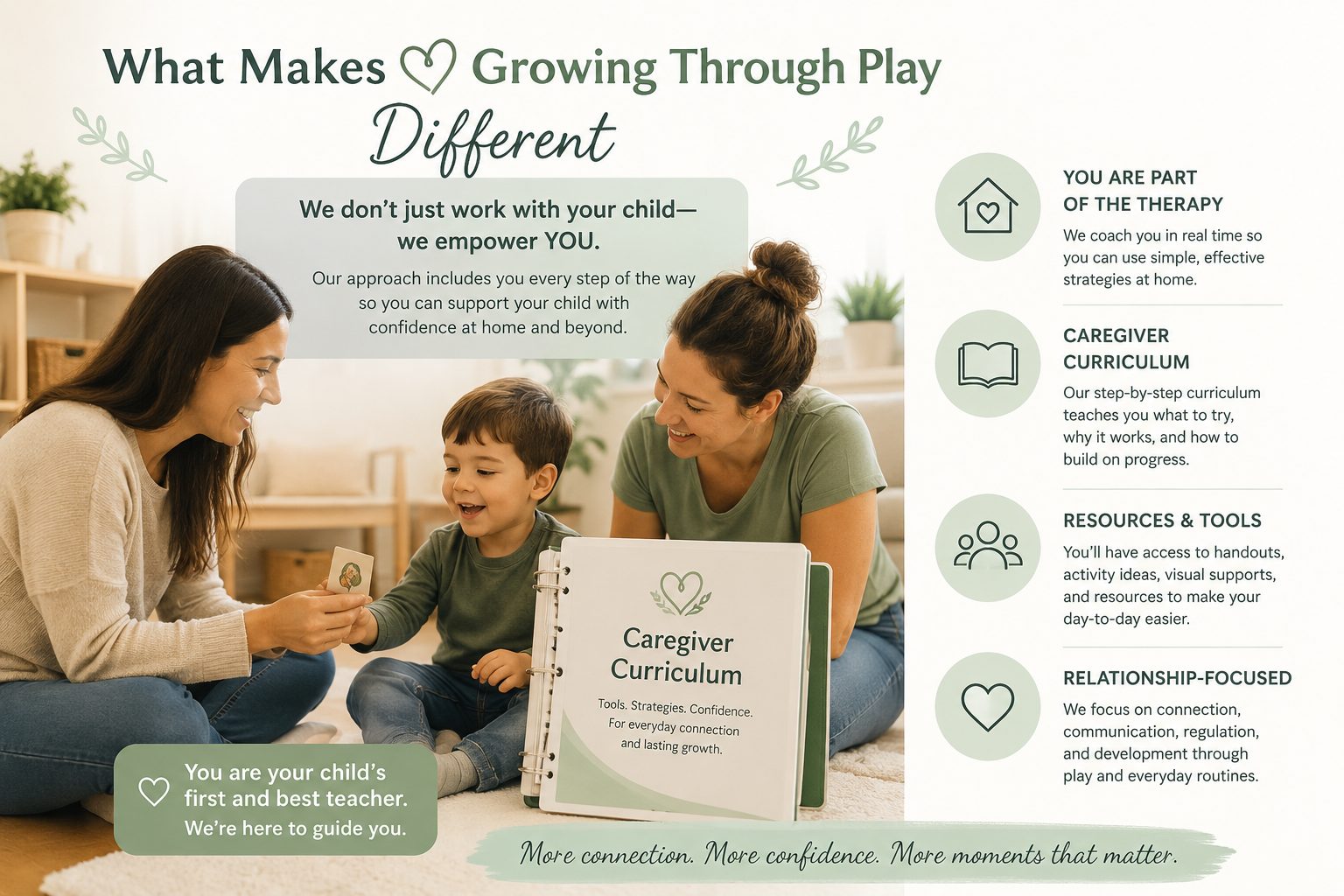
Growing Through Play offers a unique combination of in-home DIR/Floortime® caregiver coaching and a dedicated caregiver curriculum designed by Keri.
Bringing therapy into real life
Your child’s most important moments don’t only happen during a therapy session. They happen:
- On the floor.
- At the kitchen table.
- During transitions.
- At the playground.
- During mealtimes.
- In the middle of everyday life.
That’s why we practice in your real environment whenever possible.
The goal isn’t more therapy. It’s helping you recognize the opportunities that are already there.
Is Floortime evidence-based?
Yes, including a randomized controlled trial of parent-led home-based DIR/Floortime. The citations are on their own page so you can read them yourself.
Helping you understand your child, one playful moment at a time.
Your child doesn’t need to be changed into someone else. They need people who understand how they communicate, connect, play, and experience the world.
And you don’t have to figure it out alone.