Sometimes a child wants to connect, but their nervous system is overwhelmed.
Pediatric occupational therapy for sensory processing and regulation, in your home, whether or not your child has a diagnosis.
Growing Through Play provides in-home pediatric occupational therapy for sensory processing and regulation across central Connecticut. As a pediatric OT, Keri looks at how sensory processing, regulation, motor development, play, and everyday activities affect your child’s ability to participate and connect.
Your child may not be saying “I’m overwhelmed.” But their body might be.
What you might be noticing
- Certain sounds, textures, movements, clothing, foods, or everyday experiences seem especially difficult for your child.
- Big emotions and difficulty with regulation.
- You feel unsure what to do when your child becomes overwhelmed, upset, or has difficulty transitioning.
- Getting dressed, eating, leaving the house, bedtime, or transitions feel harder than they should.
- Your child is very sensitive, or highly sensory-seeking.
- Frequent meltdowns, shutdowns, or difficulty calming.
Understanding sensory processing and regulation helps us understand whyparticipation may be difficult, not simply label the behavior as something that needs to stop.
Co-regulation comes before self-regulation
Before children can regulate their own emotions, they need support from calm, attuned adults. Over time, repeated co-regulation experiences help the brain develop the ability to self-regulate.
When connection comes first, communication, regulation, and learning naturally follow.

What a pediatric OT looks at
Sensory processing and regulation are one part of a whole-child picture. We may look at:
- Sensory preferences and processing
- Regulation and arousal
- Motor planning and coordination
- Play skills
- Feeding and mealtime participation
- Communication and engagement
It starts with a developmental evaluation.
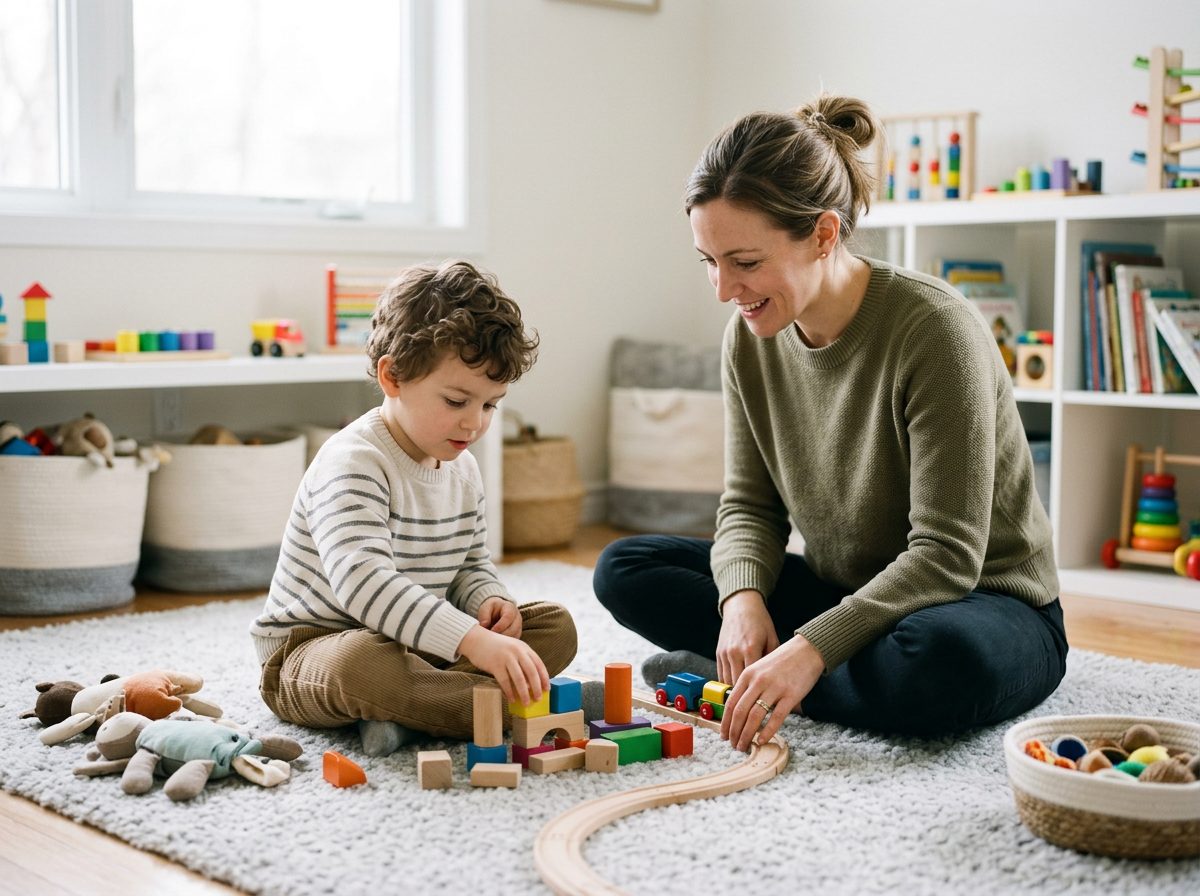
In your home, in your routines
What we do together
- Support regulation through co-regulation.
- Turn everyday routines into opportunities for connection.
- Support a difficult transition, and find ways to connect during mealtime.
- Help you feel more confident when challenging moments arise.
Children learn best when they feel safe, understood, and connected.
You don’t need a diagnosis to start
Floortime supports any young child working on connection, communication, regulation, or play, whether or not they have a diagnosis. Some children simply benefit from extra support.